The International Symposium on Employee Ownership brought thought leaders, practitioners, researchers, and government officials to the University of Oxford this August, continuing the Employee Ownership Foundation’s role in fostering an international dialogue about how employee ownership can grow and evolve across borders.
The week focused on the policy, finance, governance, and legal structures shaping employee ownership in different countries. Participants examined comparative laws, cross-border case studies, financing, and the economic, workforce, and community benefits employee ownership can create. Country-specific developments highlighted progress in the United States, United Kingdom, Spain, Canada, Slovenia, and Denmark, as well as active policy discussions in Ireland, Germany, France, Finland, and the Netherlands. Companies including Web Industries, Nikwax, and Taylor Guitars shared practical lessons from bringing employee ownership to workers across borders.
A highlight was a panel hosted by TEA Immediate Past Chair Karen Ellis, featuring EOF Chair Peter Ney, Campbell McDonald of Ownership at Work, and Elizabeth Nolin of Rewrite Capital Advisors. The discussion explored approaches to expanding employee ownership, from policy and financing to the practical challenges companies face in making the transition.
Throughout the week, one message came through clearly: while countries are developing models that reflect their own legal systems, political cultures, capital markets, and succession needs, many of the challenges are remarkably similar — from succession and sustainable growth to employee engagement, inequality, and long-term value creation.
“It has been a truly enriching experience to connect with participants from around the world and exchange perspectives on employee ownership and its impact on businesses, employees, and long-term sustainability,” said Véronique Cohard. “The discussions have highlighted both the different approaches countries are taking and the challenges we have in common. Every conversation brings a fresh perspective and gets us thinking about the future of business ownership and leadership.”
Those differences — and the common ground behind them — came to life at the week’s marquee event, **A Very Oxford Evening: A Formal Debate at the Historic Oxford Union.**
Founded in 1823, the Oxford Union has hosted some of the world’s most prominent leaders, including Winston Churchill, Ronald Reagan, Margaret Thatcher, and Queen Elizabeth II. This year, it hosted a transatlantic debate over the motion that **“The United Kingdom’s Employee Ownership Trust is superior to the American Employee Stock Ownership Plan.”**
Representing the United States were James (Jim) Bonham, President of the Employee Ownership Foundation, and Theodore (Ted) Becker, Partner at McDermott Will & Schulte. Arguing for the United Kingdom were Robert Postlethwaite, Founder and Managing Director of Postlethwaite Solicitors, and Ann Tyler, Chair of Ownership at Work.
The debate followed the Union’s traditional parliamentary format, with the audience responding in real time. Strong arguments were met with foot-stomping and “hear, hear” from the floor — a tradition dating back nearly two centuries. After opening arguments, rebuttals, and cross-examinations, Jim and Robert closed with their final cases before the audience cast its verdict by ballot.
The exchange sharpened the differences between the two structures while making a broader point: **there is no single employee ownership model that works for every economy.** Each has something to teach the other — from simplicity and permanence to employee benefit, financing, and long-term stewardship.
Robert Postlethwaite called the debate “a brilliant idea,” noting that attendees came away with a clearer understanding of the relative strengths and weaknesses of the U.S. and U.K. models. One attendee even suggested a rematch — this time in the United States.
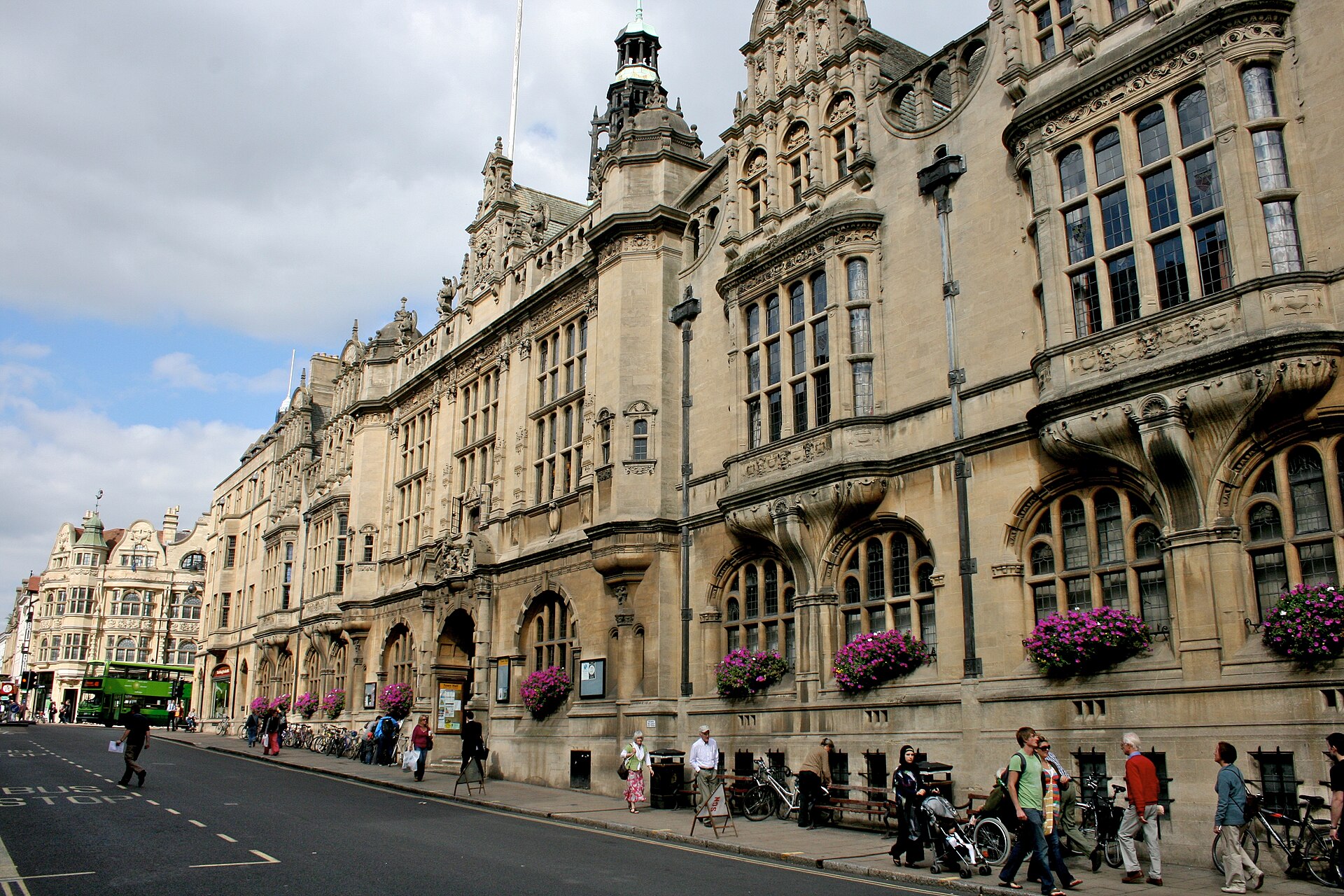
Bonham closed out the Symposium with remarks at the Oxford Town Center, bringing to a close a week that underscored the Employee Ownership Foundation’s important role in the broader employee ownership movement.
Since its founding, the Foundation has supported the research, data collection, and convenings that make conversations like this possible. This year, that work came together at Oxford as participants shared ideas, challenged assumptions, and explored how employee ownership can strengthen businesses, broaden opportunity, and create lasting value.
The Symposium demonstrated both the growing momentum behind employee ownership and the value of bringing people together to learn from one another. In the end, perhaps that was the most important takeaway: different countries may take different paths, but there is enormous value in sharing what we are learning along the way.
Source: ESOP Association Report, September 9, 2026